

Garnets Galore
January birthstone, February color story, eternal object of desire

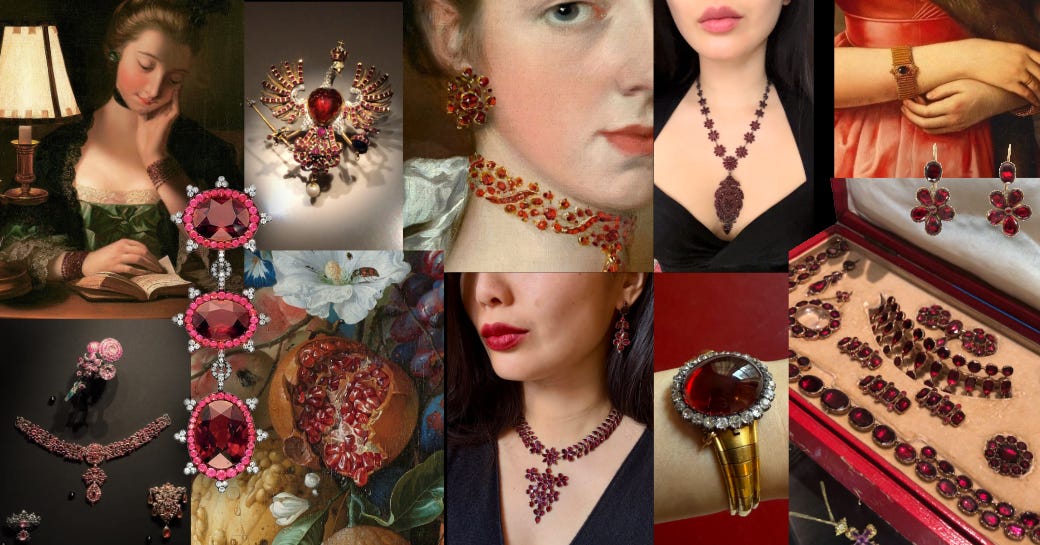
If you were born in January (happy belated!), your birthstone is the garnet. This protective stone’s name comes from the Latin granatus, meaning “pomegranate.” The stone resembles the fruit’s abundant seeds, and this symbolic connection and vibrant color make it one of the sexiest, and most underrated, birthstones.
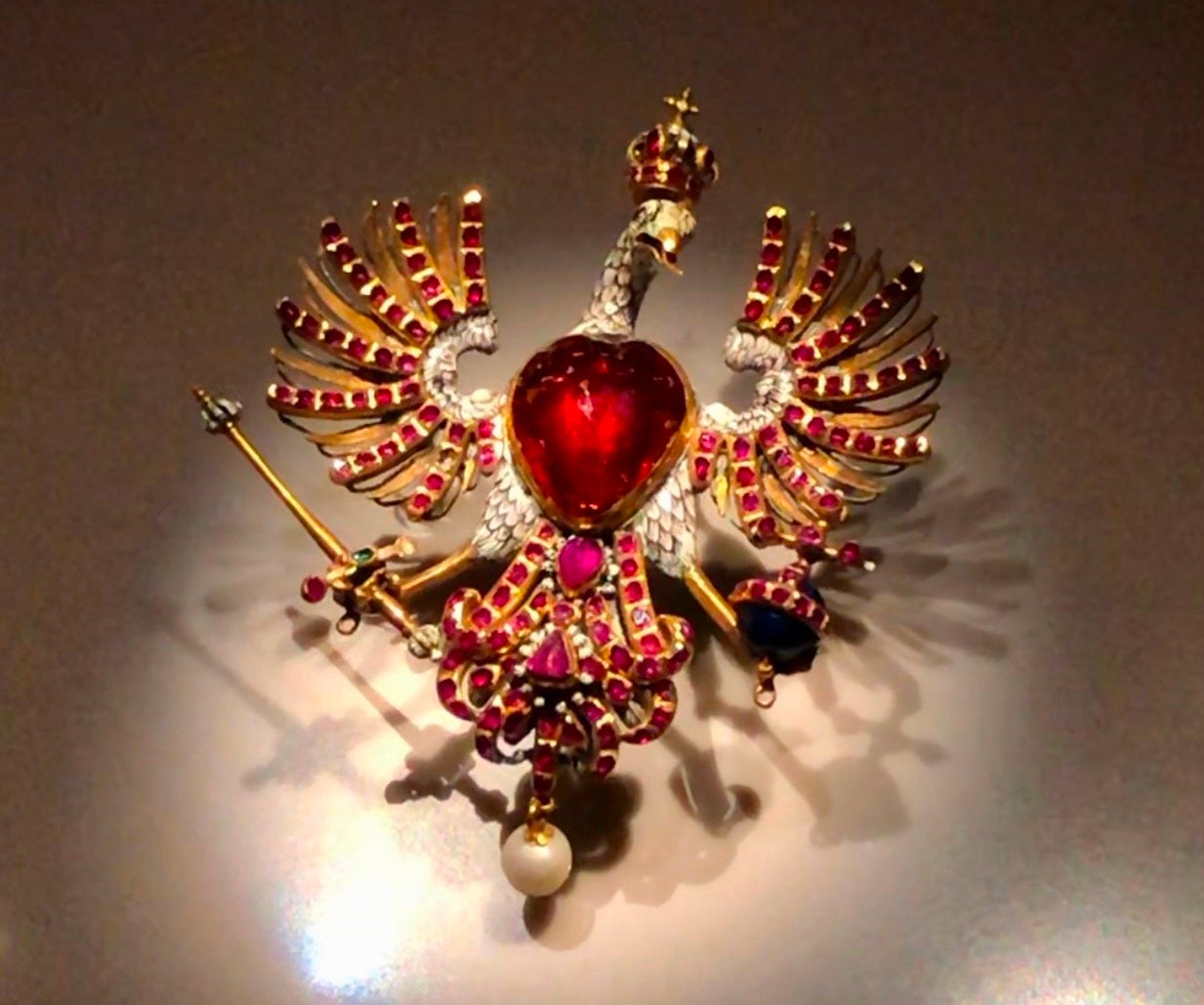
Garnets are semi-precious, but wholly desirable. Just look at this late 17th century Polish eagle brooch commissioned by King Władysław IV for his Queen, Cecilia Renata of Austria, featuring a large garnet at the center.
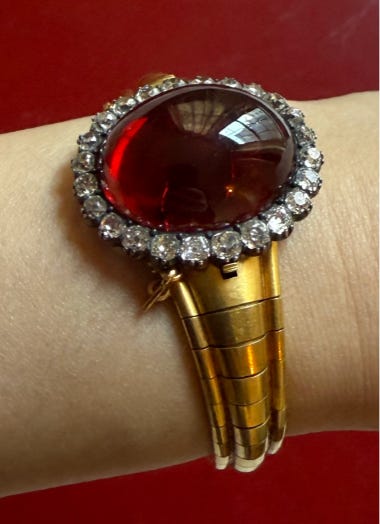
A semi-precious birthstone offers the luxury of scale, both in the size of the stones and the size of your collection. What a blessing to really get to enjoy your birthstone…many garnets feel big enough to dive right in, like this large cabochon which feels like a crystal ball:
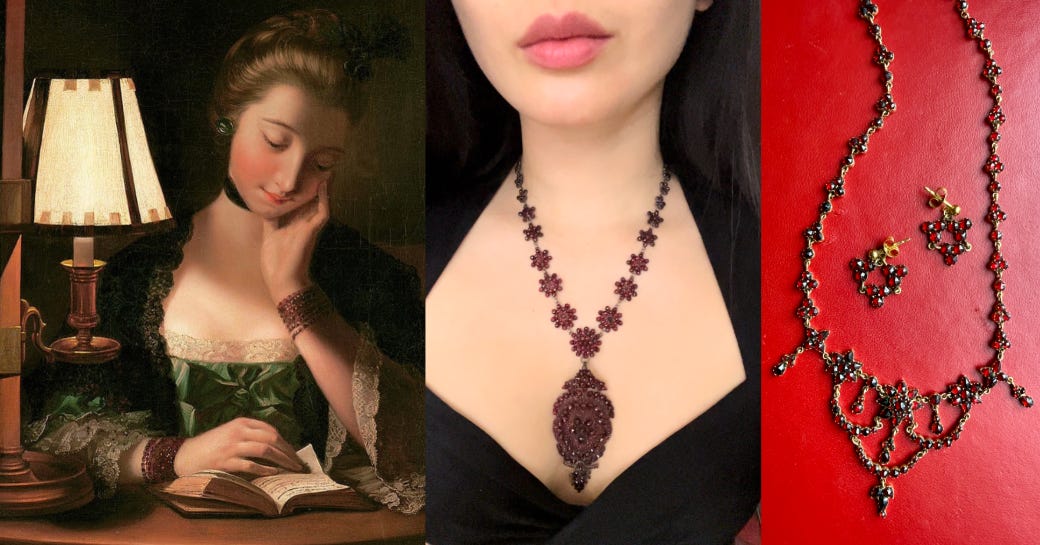
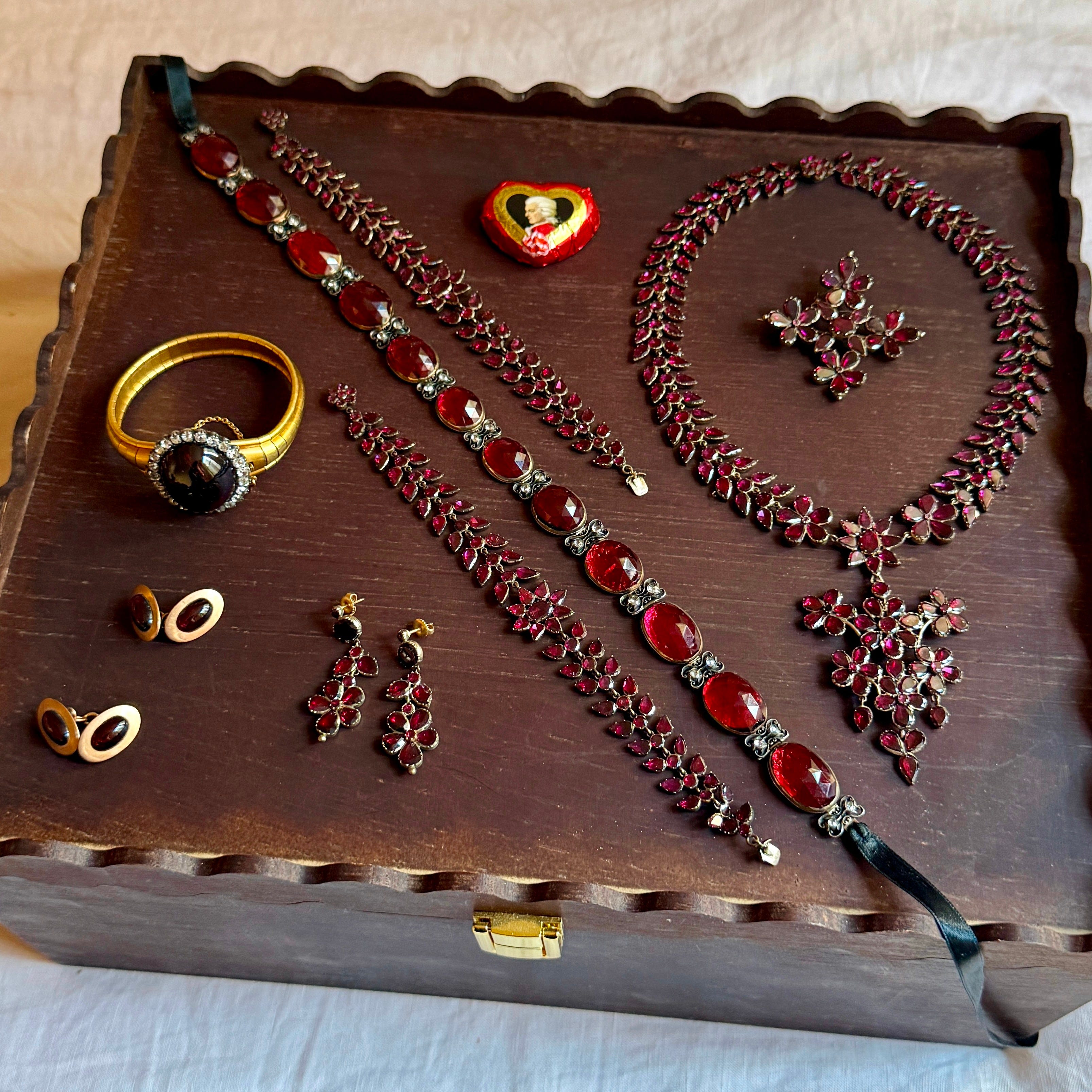
On the other end of the scale, the pomegranate seed resemblance is especially apparent in Victorian era jewels featuring Bohemian (pyrope) garnets, usually cut small and mounted in clusters:
Garnets measure 6.5 - 7.5 on the Mohs hardness scale (out of 10, the benchmark set by diamond) and have a refractive index of 1.7 - 1.88 (compared to 2.42 for diamond)
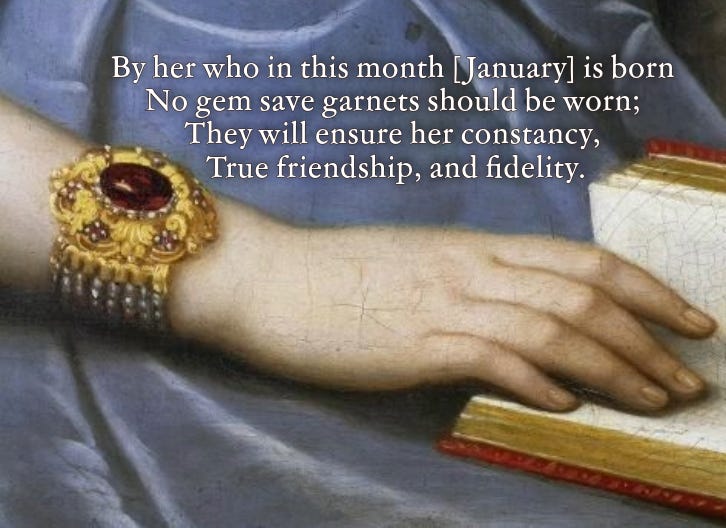
Metaphysically, garnets have long been associated with creativity, love, and devotion. From an 1870 Tiffany & Co pamphlet on birthstones:
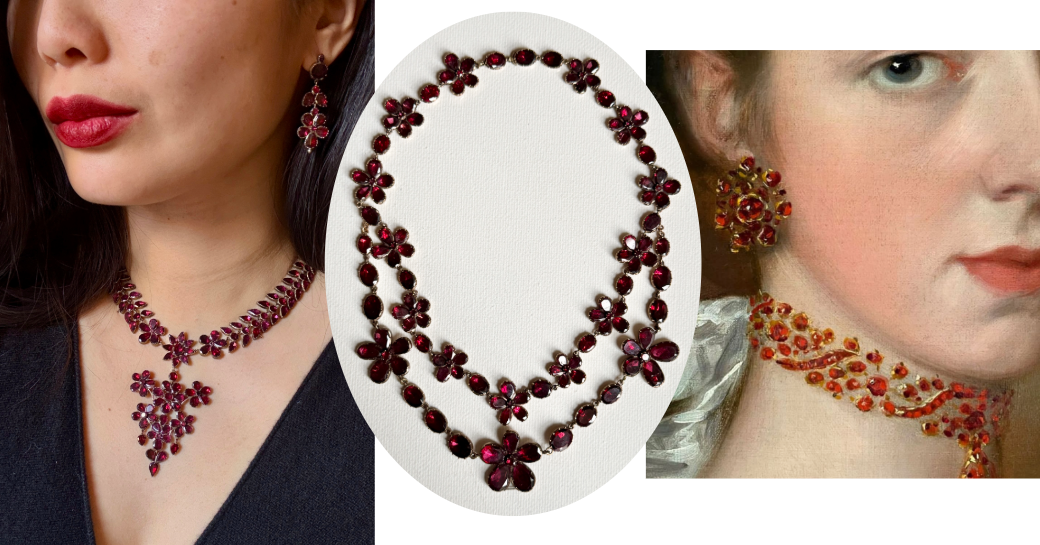
My favorite way to serve garnets is flat cut and foil backed, as in Georgian era pieces. This method maximizes the color payoff while also creating a lacy effect when worn. SWOON.
Garnets may be January’s stone, but I reach for them year-round, especially in February when I’m seeing red for a romantic Valentine’s Day and an auspicious Chinese New Year.
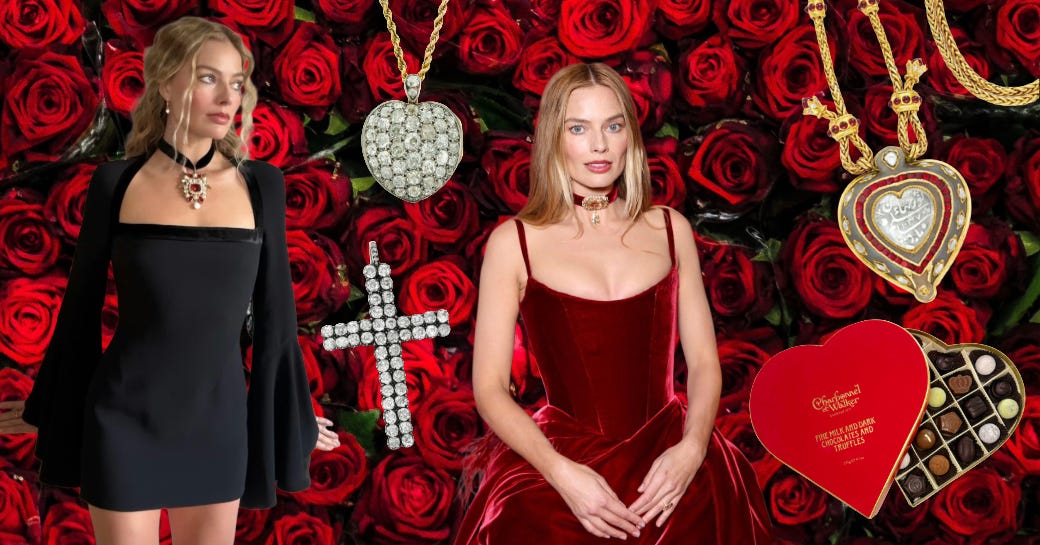
They play so well with diamonds, so I’ve included some complementary jewels inspired by Margot Robbie’s romantic Wuthering Heights press tour looks by Andrew Mukamal which I feel really capture the spirit of the season. Or at least I am taking notes for my Valentine’s Day look!
I love the juicy burgundy of classic almandine & pyrope garnets, but there are many of other garnet types and associated shades if that’s not your glass of wine. Have you heard of mandarin (spessartite) or demantoid garnets? We can discuss another time…those colors deserve their own stories!
It’s a pleasure to read your impressions, thoughts and facts, delivered in crisp words! Thanks!
Beautiful breakdown of why garnets deserve more attention. The Georgian flat-cut pieces with foil backing really are stunning, that tecnique maximizes depth in a way modern cuts don't. I inherited a small garnet ring and never quite appreciated it untill reading this.